Related Post: NewspaperWood / Paper Folding Art / Woven Details
What if agricultural waste could become the foundation for a new generation of sustainable furniture and architectural surfaces?
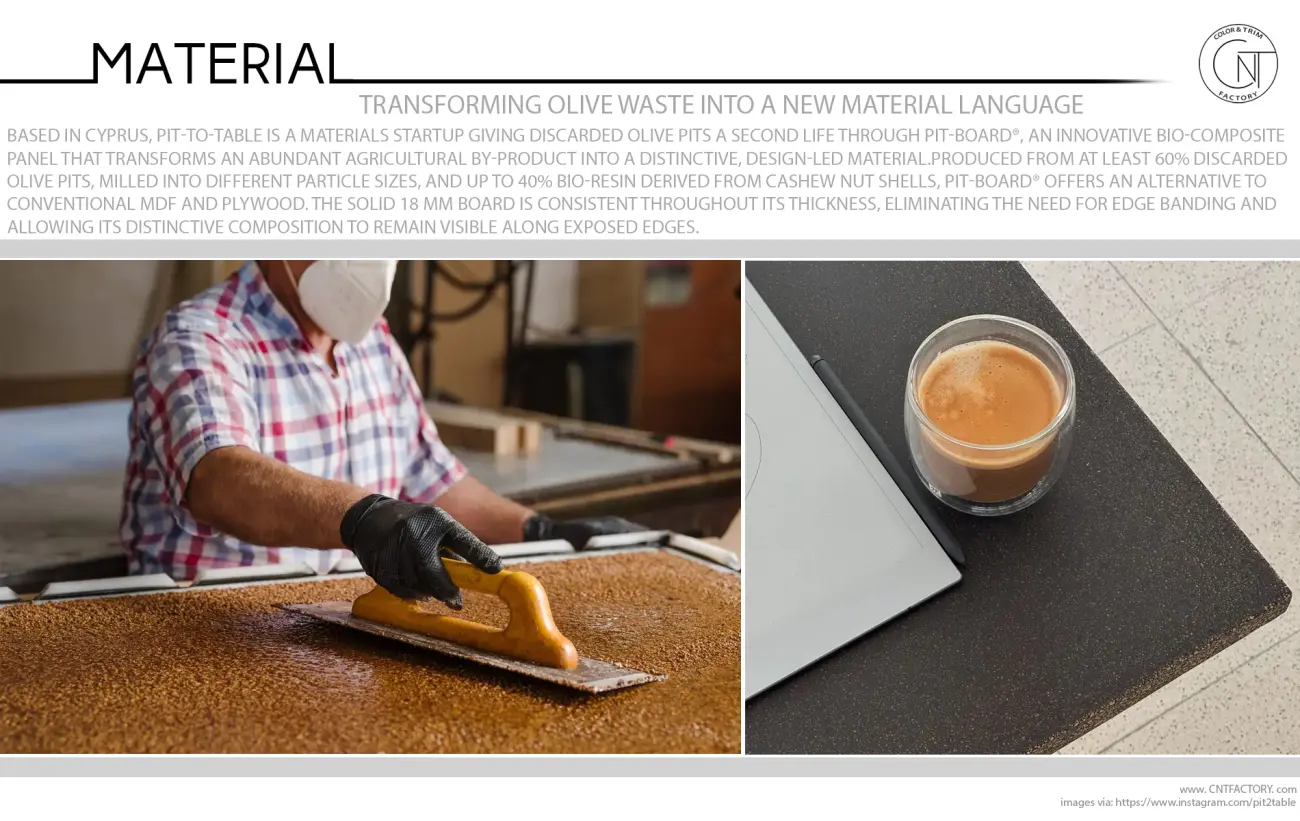
Based in Cyprus, Pit-To-Table is a materials startup giving discarded olive pits a second life through Pit-Board®, an innovative bio-composite panel that transforms an abundant agricultural by-product into a distinctive, design-led material.
Produced from at least 60% discarded olive pits, milled into different particle sizes, and up to 40% bio-resin derived from cashew nut shells, Pit-Board® offers an alternative to conventional MDF and plywood. The solid 18 mm board is consistent throughout its thickness, eliminating the need for edge banding and allowing its distinctive composition to remain visible along exposed edges.
The idea is rooted in a local challenge. Every autumn, Cyprus produces significant quantities of olive waste during the annual olive-pressing season. Rather than treating the pits as a disposal problem, Pit-To-Table reimagines them as a valuable material resource, turning agricultural residue into durable, moisture-resistant surfaces.
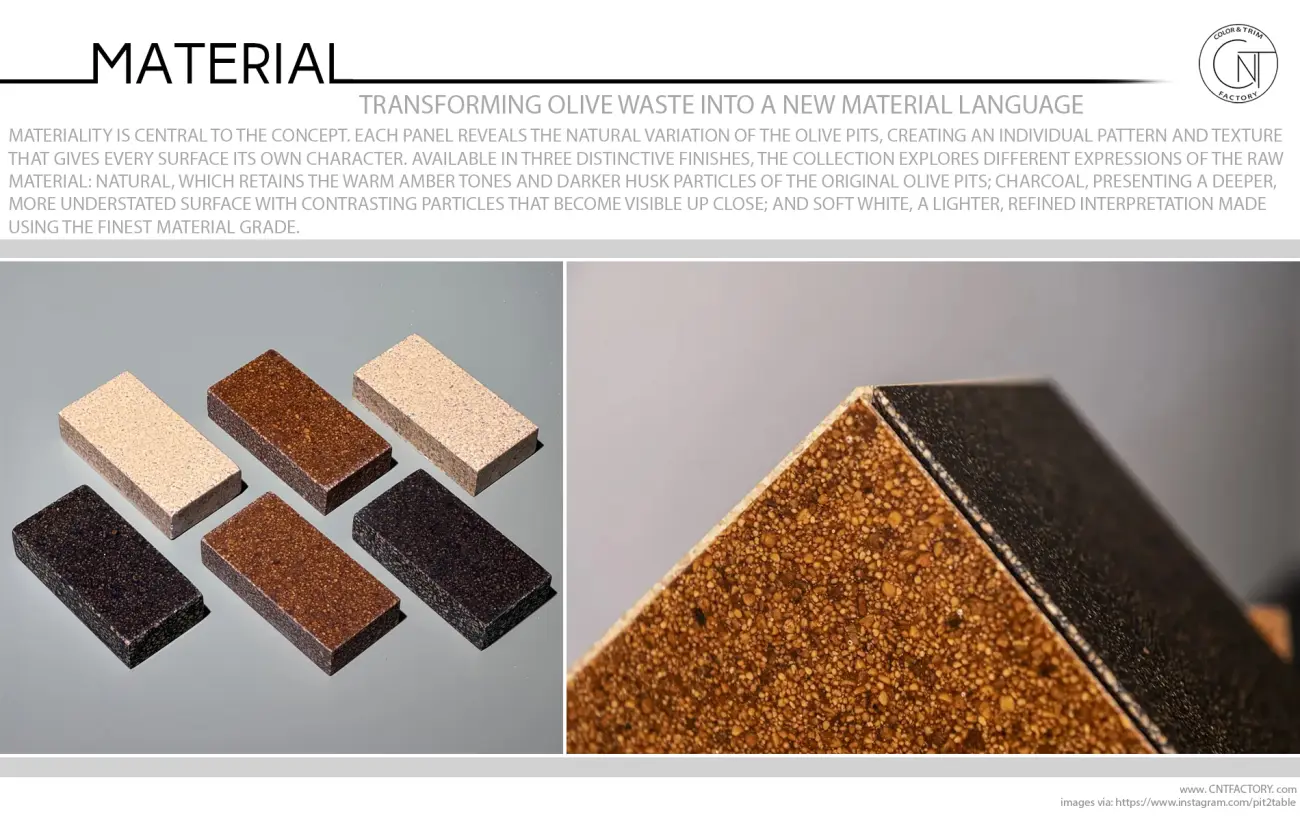
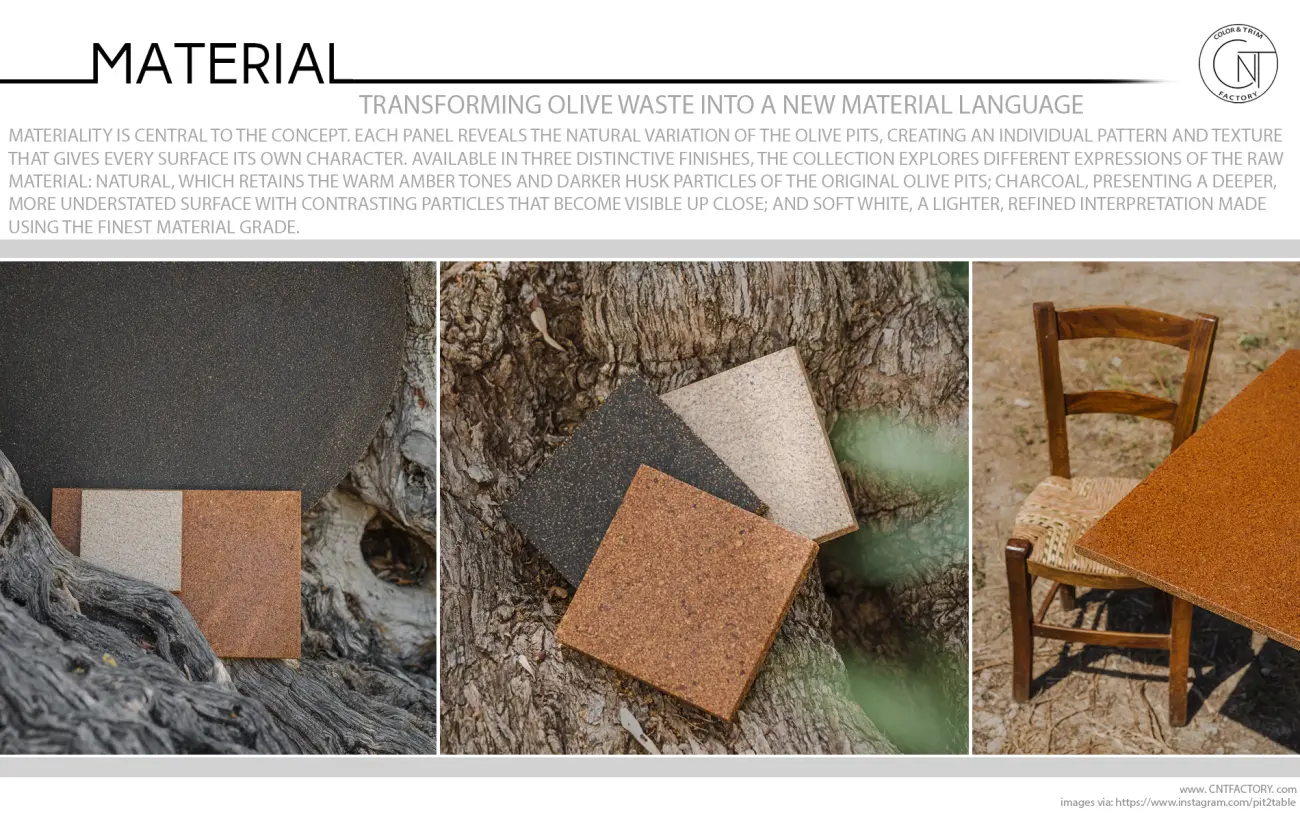
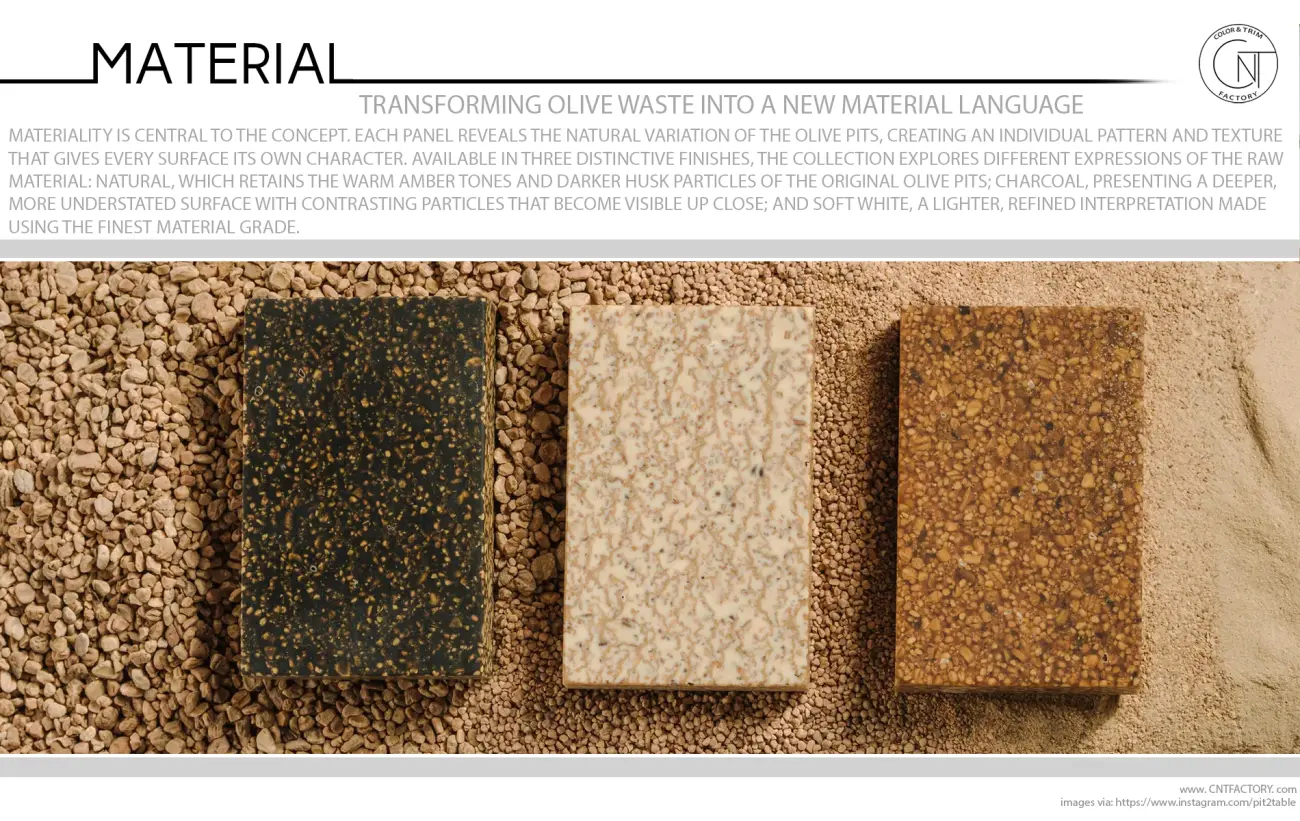
Materiality is central to the concept. Each panel reveals the natural variation of the olive pits, creating an individual pattern and texture that gives every surface its own character. Available in three distinctive finishes, the collection explores different expressions of the raw material: Natural, which retains the warm amber tones and darker husk particles of the original olive pits; Charcoal, presenting a deeper, more understated surface with contrasting particles that become visible up close; and Soft White, a lighter, refined interpretation made using the finest material grade.
Designed to function as a finished material rather than a decorative surface treatment, Pit-Board® can be used without an MDF or plywood substrate. Its solid construction opens up opportunities for a wide range of applications, including dining tables, countertops, shelving, furniture, partitions, commercial displays and architectural details.
By combining agricultural waste valorization, bio-based chemistry and material driven design, Pit-To-Table demonstrates how locally sourced resources can be transformed into a new design language one where sustainability is not simply an underlying production principle, but an integral part of the material’s visual and tactile identity.