Related Post: SEA ME – Sea Algae Yarn / Spider Silk / Siberian Birchbark Trim
Transforming agricultural waste into advanced materials, Carbon Cell is developing a new generation of sustainable foam alternatives using biochar and natural polymers. Its patent-pending technology offers manufacturers a way to reduce carbon emissions while moving away from conventional petroleum-based materials such as EPS, EPP and PIR/PUR.
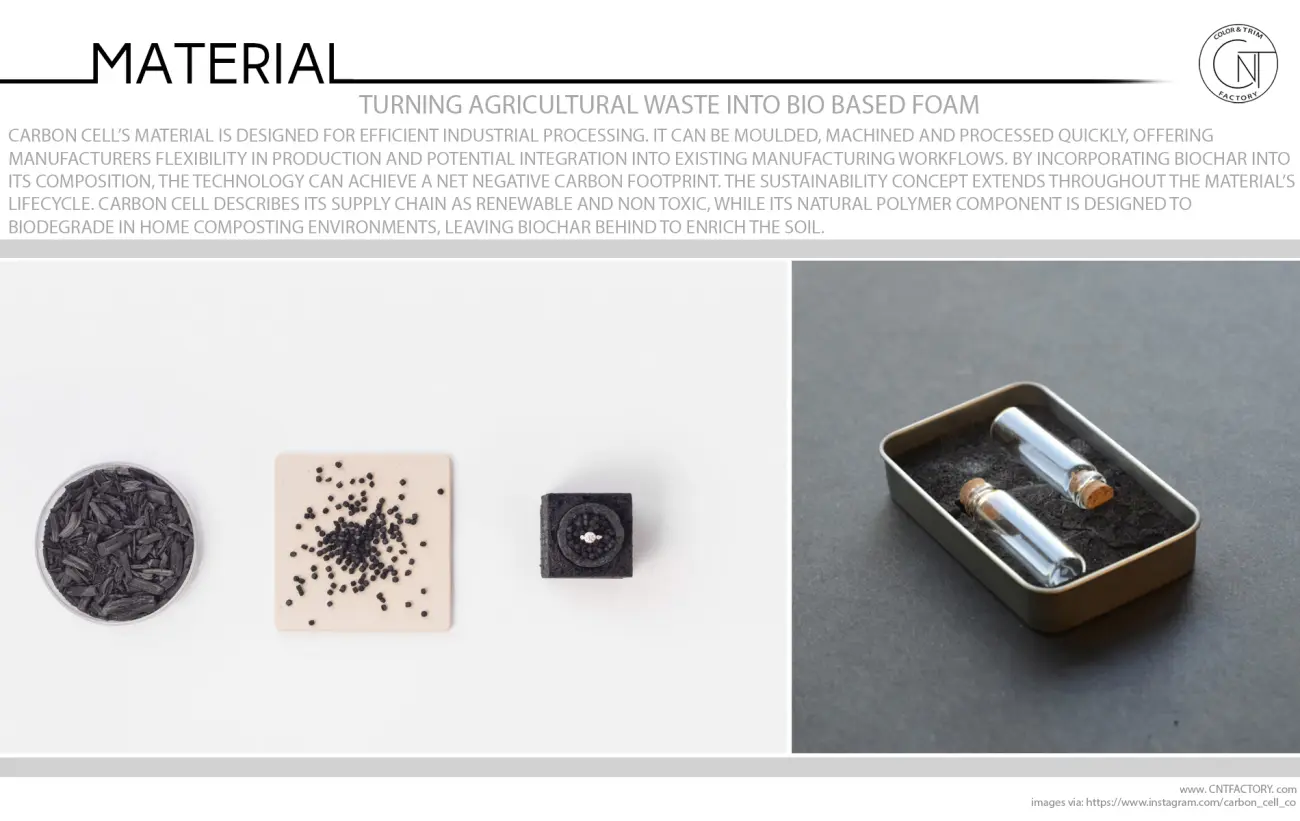
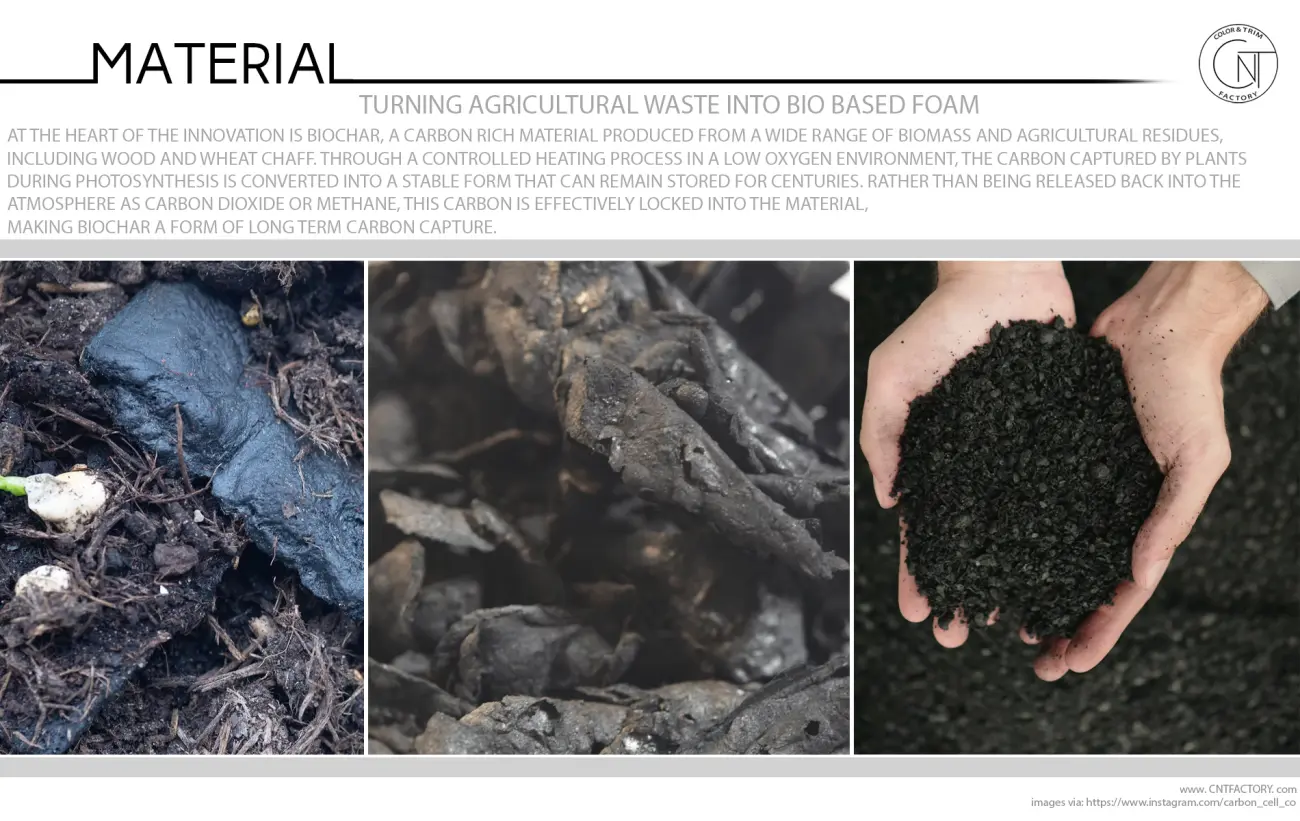
At the heart of the innovation is biochar, a carbon rich material produced from a wide range of biomass and agricultural residues, including wood and wheat chaff. Through a controlled heating process in a low oxygen environment, the carbon captured by plants during photosynthesis is converted into a stable form that can remain stored for centuries. Rather than being released back into the atmosphere as carbon dioxide or methane, this carbon is effectively locked into the material, making biochar a form of long term carbon capture.
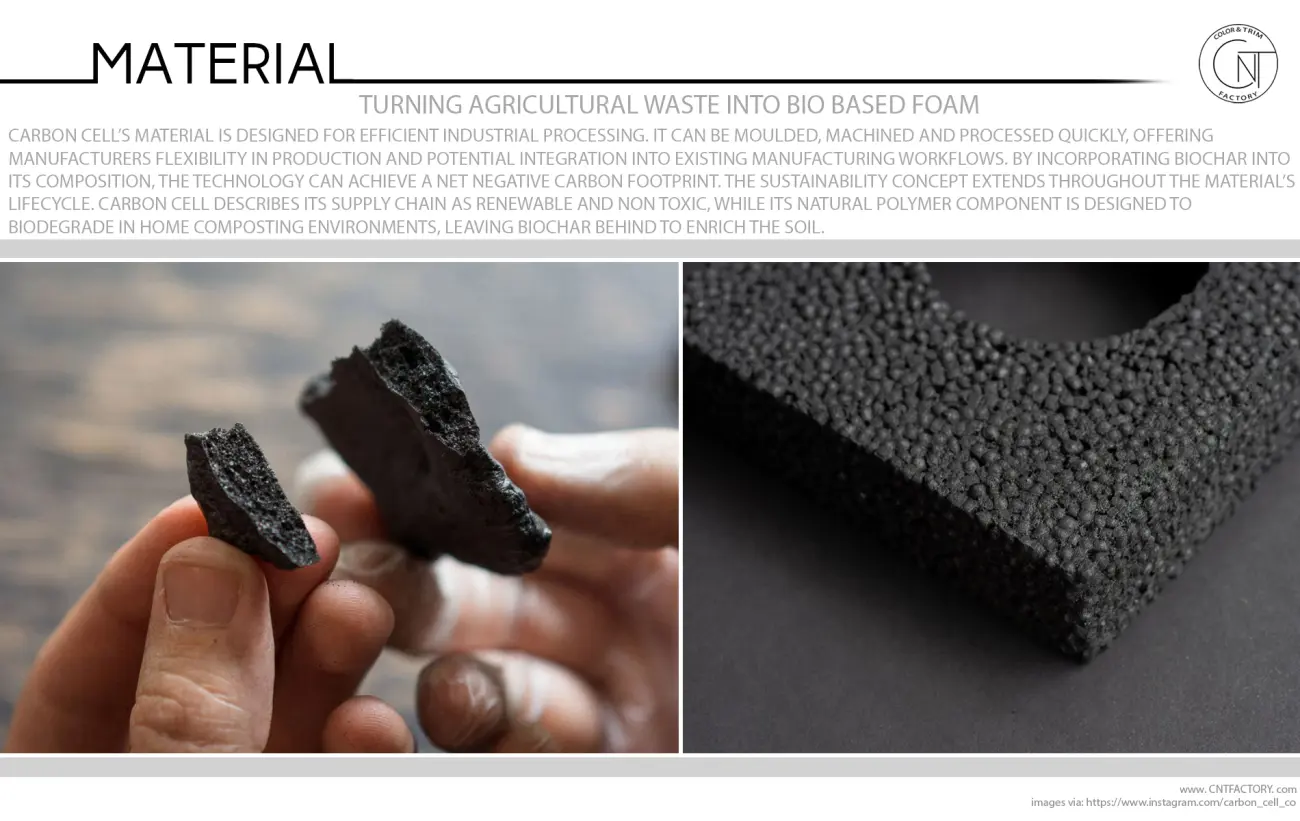
Beyond its environmental benefits, biochar brings valuable functional properties to the resulting foam. Its highly porous structure contributes to a high strength to weight ratio, thermal insulation and moisture buffering performance. The result is a lightweight yet robust material that combines thermal resistance and structural performance without relying on conventional plastics.
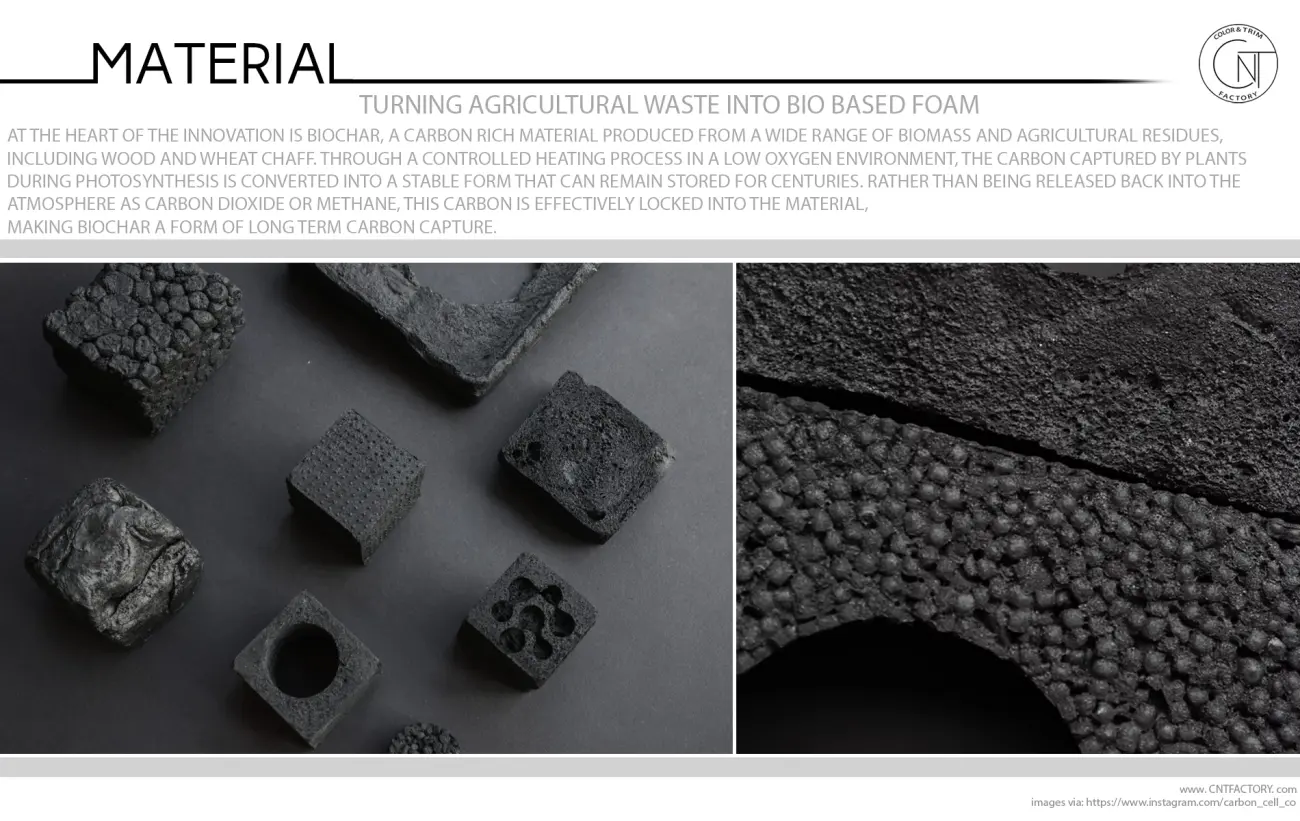
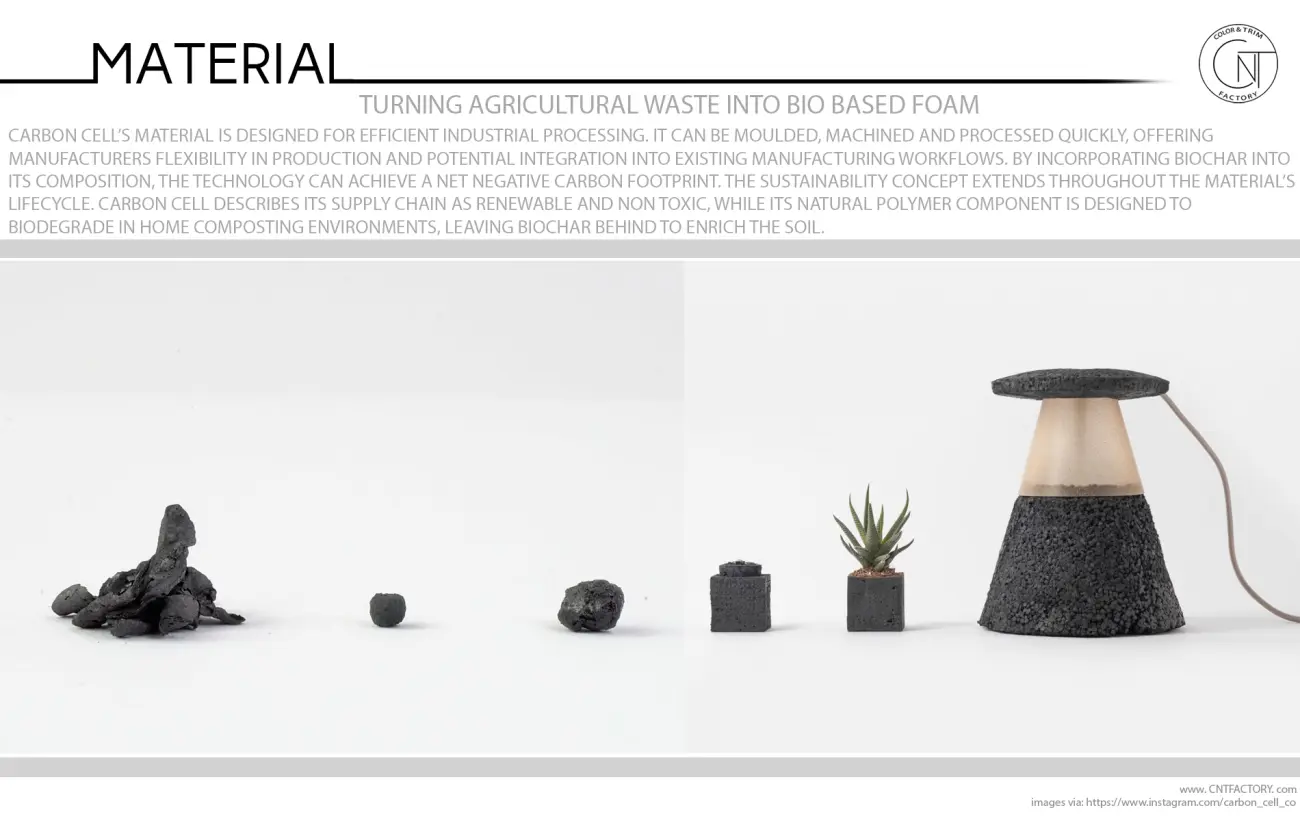
Carbon Cell’s material is designed for efficient industrial processing. It can be moulded, machined and processed quickly, offering manufacturers flexibility in production and potential integration into existing manufacturing workflows. By incorporating biochar into its composition, the technology can achieve a net negative carbon footprint.
The sustainability concept extends throughout the material’s lifecycle. Carbon Cell describes its supply chain as renewable and non toxic, while its natural polymer component is designed to biodegrade in home composting environments, leaving biochar behind to enrich the soil.
Combining carbon storage, bio based chemistry and high performance material engineering, Carbon Cell demonstrates how agricultural waste can become a valuable resource for next generation industrial applications. It presents an alternative approach to foam design, where lightweight construction, thermal performance and mechanical strength are achieved alongside a reduced dependence on fossil based plastics.